



Free written scope consultation - allowances, timeline, and change-order rules on paper before a single trade is scheduled
Master Halco Home Additions & ADU: The Miami Owner’s Guide
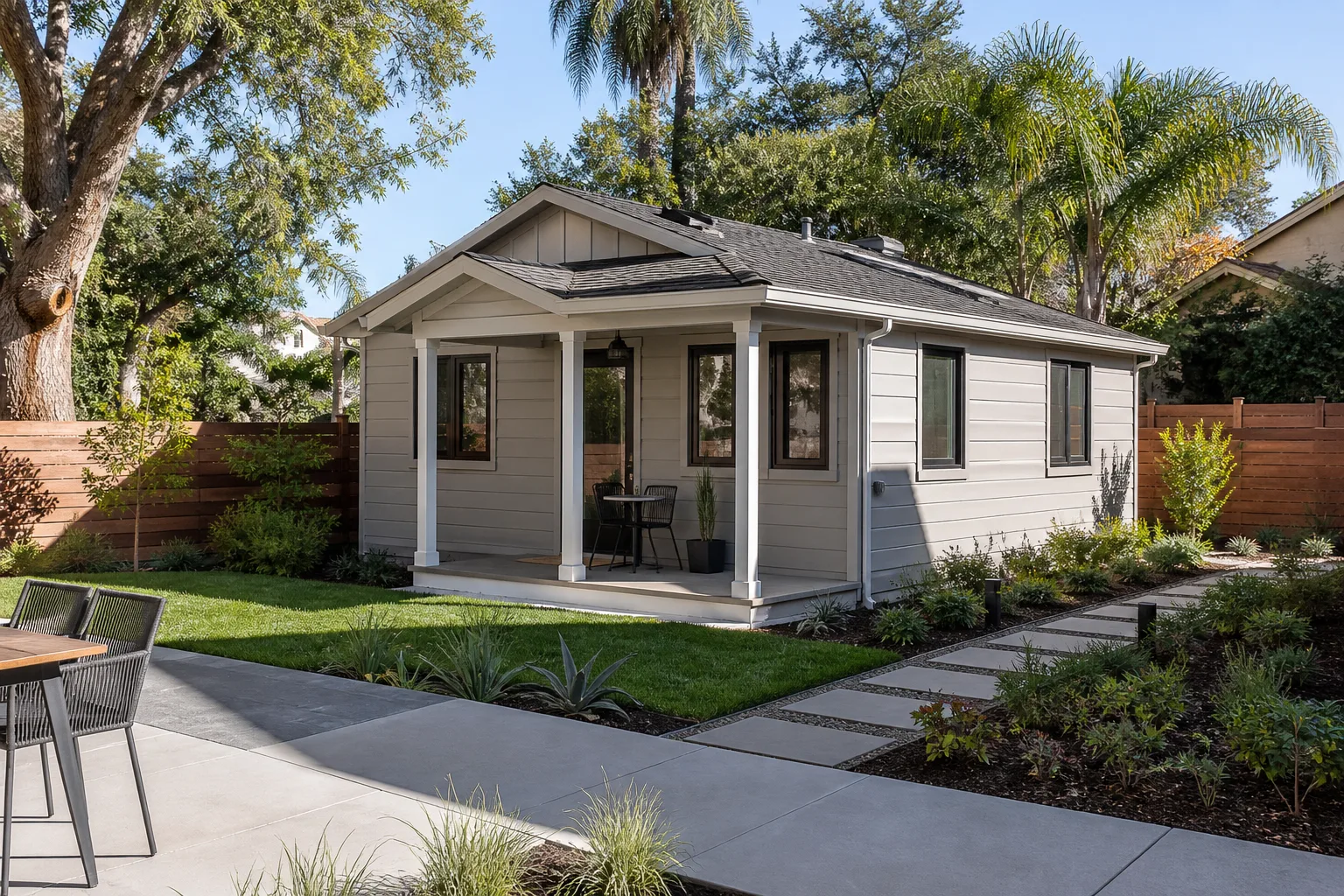
If you’re researching Master Halco home additions or an ADU in Miami, you’re likely staring at a fence, gate, or structural post that’s starting to lean, rust, or pull loose from its footing, and you need to know what it costs to fix or build on it before it gets worse. We install and repair Master Halco-compatible home additions and ADU structures throughout Miami, with full project builds typically running $53,100 to $153,400 here depending on square footage, foundation work, and finish level. That range covers what we see most often: a detached ADU shell, a garage conversion, or a room addition where the existing slab and roof line determine how much structural work the job actually needs. The failure owners notice first isn’t usually dramatic. It’s a fence post starting to tilt after a heavy Miami rain, a gate that drags because the post shifted, or a corner of an addition where the anchor bolts were never set deep enough for Florida soil.
Key Takeaways
- Full Master Halco-compatible additions and ADU builds in Miami run $53,100 to $153,400, with garage conversions at $35,400 to $94,400.
- We’re an independent Miami contractor, not affiliated with Master Halco, and we match components by spec, not by brand sticker.
- Miami’s wet-dry soil cycles and salt air are the leading reasons Master Halco posts and anchors fail early here.
- Every Mason Remodeling Co Miami project gets a written price before work starts, and it’s covered for 365 days after completion.
Which Master Halco Models This Applies To
Master Halco doesn’t make a single “home addition” product. The brand is known for structural fencing, gate hardware, and post systems that many Miami additions and ADU enclosures are framed around. What matters for compatibility is the post gauge and the anchor system, not the series name on the original invoice. We regularly work with Master Halco’s residential and light-commercial post lines, including the PostMaster steel post system and their heavier galvanized gate frames, and we match components by wall thickness, post dimensions, and coating type.
The gotcha most Miami owners run into is this: Master Halco posts come in different steel gauges, and a fence or gate built with the lighter 18-gauge post won’t carry the load of an enclosed patio roof or a covered walkway without reinforcement. If you’re adding a roof structure onto an existing Master Halco-framed fence or gate run, the original posts often need to be sleeved or replaced with a heavier gauge, typically 16-gauge or thicker. We stock common post sizes on the truck, and we source OEM and quality aftermarket equivalents based on the existing galvanization and hole pattern. For anything load-bearing above head height, we specify the post and footing as one system. That’s where Miami’s sandy soil and high water table change the math: a post set in 24 inches of concrete might hold fine in drier soil, but in parts of Kendall and Westchester, we dig deeper and use a wider footing because the ground shifts seasonally.
As far as OEM versus aftermarket goes, for Master Halco specifically we’ve found the aftermarket galvanized posts from American-made suppliers hold up just as well as the branded ones when the coating weight matches. The coating is the thing. In Miami, anything less than G90 galvanization on a steel post near salt air will start showing rust blooms within three to five years. We specify G90 or better on every coastal-adjacent project, no exceptions.
Styles & brands we work with







Signs Your Master Halco Home Additions & ADU Is Failing
- Posts leaning away from the structure. This is almost always a footing problem, not a post failure. Miami’s wet season saturates the soil, the ground shifts, and a post that was set too shallow or in a narrow footing starts to drift. Left alone for another season or two, the lean turns into a load problem where the connected beam or roof structure is now fighting the post instead of resting on it.
- White or orange rust staining running down from a bracket or post cap. You’re seeing the coating fail at the cut edge or weld point, and once that starts, it spreads under the paint or galvanization faster than you’d expect. In Doral and Hialeah, where irrigation systems keep the soil moist year-round, we see this begin at the base of posts where the concrete meets the steel.
- Gates that drag or no longer latch. The post has moved. A gate that worked fine for years and now scrapes the ground didn’t suddenly grow; its hinge post shifted out of line. Tightening the hinges is a temporary fix that usually makes the sag worse within a few months.
- Gaps opening between the fence line and the addition wall or roofline. If the original builder tied a patio cover or carport into a Master Halco fence line, movement in the posts translates into visible separation where the roofs meet the framing. In Coral Gables, where older homes often have these hybrid additions, we see this after a few heavy storm seasons.
- A post that twists or rotates when you push on it. That’s a sign the anchor or concrete collar has separated from the post. A properly set post doesn’t rotate. If yours does, the structure above it is relying on less than half its intended support, which becomes a safety issue in high wind.
See the difference
 Before
 After
After Before
 After
After Before
 After
AfterReplacement Cost & What’s Included
For a full Master Halco-compatible home addition in Miami, expect to budget $53,100 to $153,400. That covers design-to-permit drawings where needed, demolition of the existing structure if it’s a rebuild, new footings and framing, tie-in to the existing roofline, and finish work. An ADU build runs higher because of the separate electrical, plumbing, and kitchenette or bath requirements: $106,200 to $259,600 in the Miami market. A garage conversion, which often reuses the existing slab and walls, lands between $35,400 and $94,400.
What drives the range more than anything is what’s underground. Lots in Coconut Grove, the Roads, and much of Miami sit on limestone or loose sand, which changes footing depth, concrete volume, and sometimes requires helical piers. That’s a real cost, and it’s one we price honestly before you commit. Every Mason Remodeling Co Miami project includes a written line-item price before any work starts, permits pulled and inspections passed, and coverage under our 365-Day Done Right Promise: if the work is not right within a year of completion, we make it right at no cost to you. No verbal estimates that grow. No surprise invoices at the end.
DIY or Call Us?
For a leaning post or a sagging gate, there are things you can safely check yourself: look at the concrete collar around the base of the post for cracks, check whether water pools at the base after rain, and see if the post moves when you push it. But if you find a post that rotates, a beam pulling away from the house, or rust that’s eaten through the wall of the steel, stop there. Those are load-bearing, high-tension failures, and attempting to jack the structure back into place without knowing the load path is how homeowners get hurt. We’ve been called in after more than a few DIY fixes in Miami where the homeowner’s “temporary brace” became a permanent hazard. What we do is assess what failed, why it failed, and whether the fix is a reinforced footing, a post replacement, or a full structural upgrade to carry the addition that was built on top of it. If you want a straight answer, call (850) 780-8123 and we’ll come look at it. The estimate is free.
FAQs
In Miami’s climate, a properly installed galvanized steel post with a G90 or better coating and a correctly sized concrete footing will typically last 20 to 30 years before it needs meaningful attention. Posts set too shallow, too narrow, or with lighter galvanization often show serious problems within five to seven years, especially near the coast or in areas with constant irrigation runoff. Call (850) 780-8123 if you’re not sure which category your structure falls into.
In most cases, the post itself can be reset or replaced without rebuilding the entire structure, as long as the framing and beams above it are still sound. What we look for is whether the load transfer is intact: if the beams are sagging or the roof line has dropped, repairs get more involved. We’ll give you a straight read on repair versus replacement at no charge for the estimate.
A room addition typically runs 8 to 14 weeks from permit approval to final inspection, and an ADU runs 4 to 7 months depending on the utility work and finish level. Miami permitting and inspections are a real part of that timeline, and we handle them from start to finish. We quote schedules we intend to keep, and our written price includes the project schedule with your contract.
We keep common galvanized steel posts in the gauge and height ranges we install most often, gate hinge and latch hardware, concrete anchor bolts, and post caps in stock for most Miami service calls. For specialty sizes or heavier gauge steel, we order from our suppliers with a lead time of three to seven days depending on the spec. Call (850) 780-8123 and we’ll tell you what we have for your exact situation.
If you’re dealing with a failing Master Halco post, gate, or addition in Miami and want an honest price with a crew you can verify before they ever walk through your gate, call Mason Remodeling Co Miami at (850) 780-8123. We’ll show up, read the site, and give you a written number. No padding, no stories, no surprises.
Written by Isaac Pruett, Owner, Mason Remodeling Co Miami at Mason Remodeling Co Miami, serving Miami and nearby areas.


