








Free written scope consultation - allowances, timeline, and change-order rules on paper before a single trade is scheduled
Schluter Roofing: The Miami Owner’s Guide
We stock and install Schluter-compatible roofing components throughout Miami, with most replacement jobs running $470 to $2,125 installed depending on what failed and how much of the assembly has to come apart. If you’re reading this, you’ve probably already spotted the problem: a lifted edge, a drip stain on the ceiling, or water pooling along a flashing line that used to stay dry. The short version is this: Schluter builds excellent waterproofing systems, but Miami’s heat, humidity, and storm cycles push every seam and membrane harder than almost any climate in the country.
Mason Remodeling Co Miami is an independent service provider. We are not affiliated with Schluter. That said, we’ve torn out enough failed installations in this city to know exactly which Schluter parts hold up, which ones don’t, and what a correct repair should cost before the first tool comes off the truck.
Which Schluter Models This Applies To

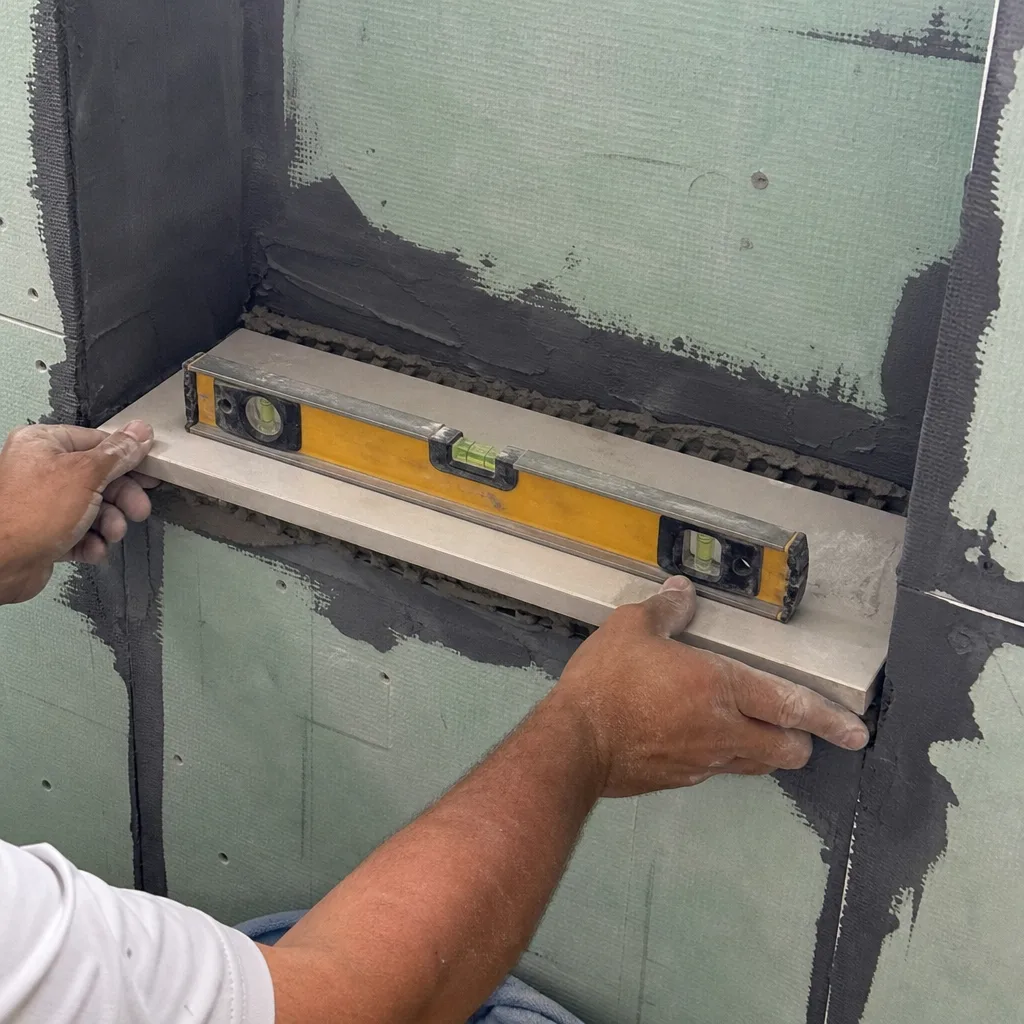
Schluter’s roofing and waterproofing lines break into two families that Miami homeowners encounter most often: the DITRA and DITRA-HEAT uncoupling membranes used under tile on flat roofs, balconies, and terraces, and the KERDI sheet membranes and KERDI-BOARD panels used for flashings, parapet walls, and roof-to-wall transitions. If your roof uses a Schluter system, the part that failed is almost always the membrane itself, a corner seam, or the metal trim profile at the edge, not the tile on top of it.
The compatibility gotcha most Miami owners don’t know: Schluter membranes are sized and cut for specific substrate conditions. DITRA, for example, is designed for plywood or OSB substrates and requires a modified thin-set mortar on the underside. KERDI is specified for concrete and masonry. Putting KERDI over plywood, which we see more often than we’d like after someone else’s handyman “fixed” a roof, voids the Schluter warranty and fails again within two or three Miami summers. Before ordering any part, check the printed product code on the membrane edge or the back of a removed piece. That code tells you the exact series, thickness, and roll width. If you can’t find it, measure the thickness: DITRA runs roughly 1/8 inch, DITRA-XL runs just under 1/4 inch, and KERDI runs about 8 mil, which is thinner than a credit card.
For aftermarket equivalents, there are decent options from competing membrane makers, but we tell our Miami customers straight: on a roof assembly, the OEM Schluter part is the safer call. The seams, fleece backing, and bonding compatibility are engineered together. A mixed-brand seam is the first place water finds a way in, and in Miami, water always finds a way in.
Styles & brands we work with







Signs Your Schluter Roofing Is Failing
- Water staining on the ceiling below a flat roof or terrace. This usually means a seam has opened or a membrane has torn. The water travels along the substrate before it shows up inside, so the stain is rarely directly under the failure point.
- Lifting or curling at membrane seams and edges. Miami’s UV exposure breaks down adhesives faster than manufacturers’ northern testing suggests. Once an edge lifts, wind-driven rain gets underneath and the problem compounds fast.
- Efflorescence or white mineral streaks on tile or concrete below a roofline. That’s water moving through the assembly and carrying salts out. It means the membrane is no longer stopping moisture migration.
- Hollow-sounding tiles on a flat roof deck. This points to broken thin-set bond, often caused by trapped moisture under the membrane. The membrane may look fine from above while the assembly is failing underneath.
- Rusting or corroded metal trim at roof edges and parapet caps. Once Schluter’s metal profiles lose their protective coating in salt air, the metal expands and contracts at a different rate from the membrane, opening the seam along the entire edge.
See the difference
 Before
 After
After Before
 After
After Before
 After
AfterReplacement Cost & What’s Included

In Miami, expect a Schluter roofing parts replacement to run $470 to $2,125 installed. That range reflects the difference between a simple edge reseal with new trim (under $500) versus removing tile, replacing a section of membrane, re-bonding, and re-tiling a roof deck section (over $2,000). Most mid-size flat roof membrane repairs on homes in Coconut Grove, Coral Gables, and Kendall land between $800 and $1,400.
What drives the price: access (a second-story terrace runs higher than a ground-level roof deck), how much tile has to come up, and whether the substrate below the membrane has rotted and needs replacement. Mason Remodeling Co Miami gives you a written price before any work starts, with the parts, labor, and disposal listed as separate line items. No change orders unless we find hidden damage, and if we do find it, we show it to you and quote it before touching it. The work is covered by our 365-Day Done Right Promise. If the repair fails within a year of completion, we return and fix it at no cost.
DIY or Call Us?
You can safely check a few things yourself: look for lifted seams, run a hose over the roof while someone watches the ceiling below, and photograph what you find. That’s useful information for whoever repairs it. What you should not do is peel back a membrane section, apply a hardware-store patch, or caulk a seam and hope. Roof waterproofing is not a caulk-and-paint job. The danger here is not physical injury, it’s a false repair. A roof you’ve “fixed” that’s still leaking is a roof quietly rotting through the substrate, and by the time the stain shows up again, the repair costs three times what the original fix would have. If you suspect a Schluter membrane failure, call us at (850) 780-8123. We’ll tell you what we think it needs before we schedule anything.
FAQs

A properly installed Schluter membrane on a flat roof or terrace in Miami typically lasts 15 to 20 years before seam or UV degradation requires repair, though the tile on top may outlast it. Call (850) 780-8123 if yours is showing signs before that, because that usually points to an installation issue rather than a material failure.
Yes, localized seam failures, small punctures, and edge lifting can usually be repaired with a new membrane patch and fresh bonding mortar, but only if the substrate is still sound. We’ll cut a test opening and show you what’s underneath before quoting a repair versus a section replacement.
Most Miami roof deck membrane repairs take one day, including removing tile, replacing the failed section, re-bonding, and re-tiling. Larger deck sections or substrate replacement may run two days. We schedule the return visit to re-grout and seal within the same week.
We keep DITRA, DITRA-XL, and KERDI membrane rolls, KERDI-BAND, inside and outside corners, and Schluter metal edge profiles on our trucks, so most Miami repairs don’t wait on a parts order. We also stock parts for KraftMaid, Cambria, and Silestone products when a project spans roofing and interior work. Call (850) 780-8123 and we’ll confirm what’s on hand before scheduling.
Written by Isaac Pruett, Owner, Mason Remodeling Co Miami at Mason Remodeling Co Miami, serving Miami and nearby areas.


